
Recrystallization Solvent Choice
Chemistry Tools | June 16, 2026 (updated June 23, 2026) | 10 min read
How to choose a recrystallization solvent and troubleshoot oiling out, poor recovery, and impure crystals.
| Observation | Likely issue | Fix |
| No crystals | Too soluble | Try less solvent or different solvent |
| Oiling out | Too hot or too concentrated | Cool slower or seed |
| Impure crystals | Impurities co-crystallize | Repeat or change solvent |
| Low recovery | Too much solvent | Use minimum hot solvent |
The Goal
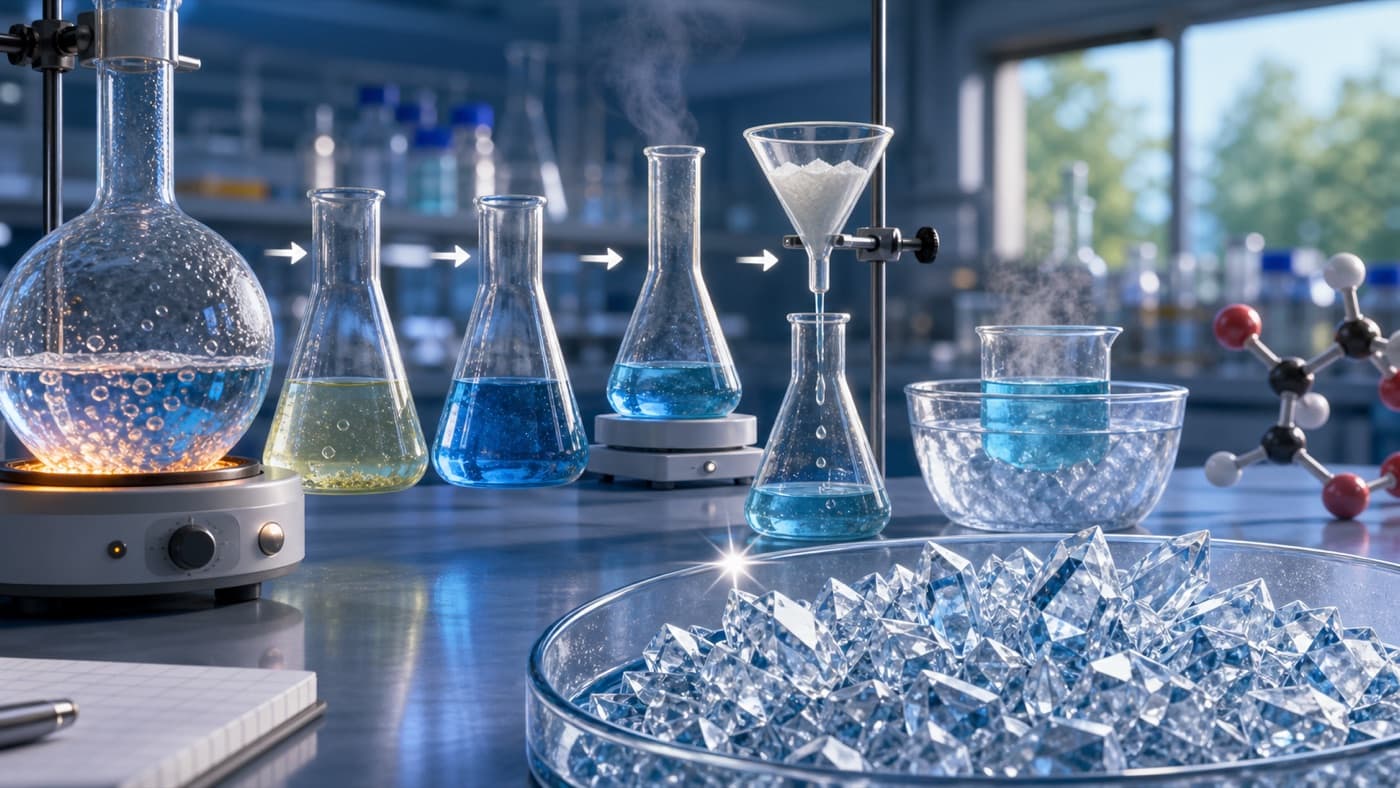
Recrystallization purifies solids by exploiting temperature-dependent solubility. The target compound should dissolve well in hot solvent but poorly in cold solvent. Impurities should either stay dissolved or be removable by hot filtration.
A perfect solvent is rare, so chemists screen small samples before scaling up.
Choosing a Solvent
If the compound dissolves at room temperature, the solvent is usually too good and recovery may be poor. If it does not dissolve when hot, the solvent is too poor. A useful solvent sits between those extremes.
Mixed-solvent recrystallization can help when no single solvent works. Dissolve in a good hot solvent, then add a poor solvent until the solution is near saturation.
Troubleshooting
If crystals do not form, scratch the flask, seed with a crystal, concentrate the solution, or cool more slowly. If oil appears, the compound separated too quickly or above its melting point; reheating and slower cooling may help.
Activated charcoal can remove colored impurities, but too much charcoal can adsorb product and reduce yield.
Useful Site Notes
Use the Recrystallization Methods note for solvent choice tables, workflow steps, and troubleshooting. Use the Solvent Miscibility Chart when choosing mixed solvent systems.
Practice With the Free Calculators
Reading the method is step one — running real numbers through it is what makes it stick. These free tools pair well with this guide: