pH and pOH for Acids and Bases
Chemistry Tools | April 21, 2026 (updated April 28, 2026) | 8 min read
A practical guide to pH, pOH, hydrogen ion concentration, and hydroxide ion concentration.
| Quantity | Formula | Use |
| pH | -log[H+] | Acidity |
| pOH | -log[OH-] | Basicity |
| [H+] | 10^-pH | Hydrogen ion |
| [OH-] | 10^-pOH | Hydroxide ion |
What pH Means
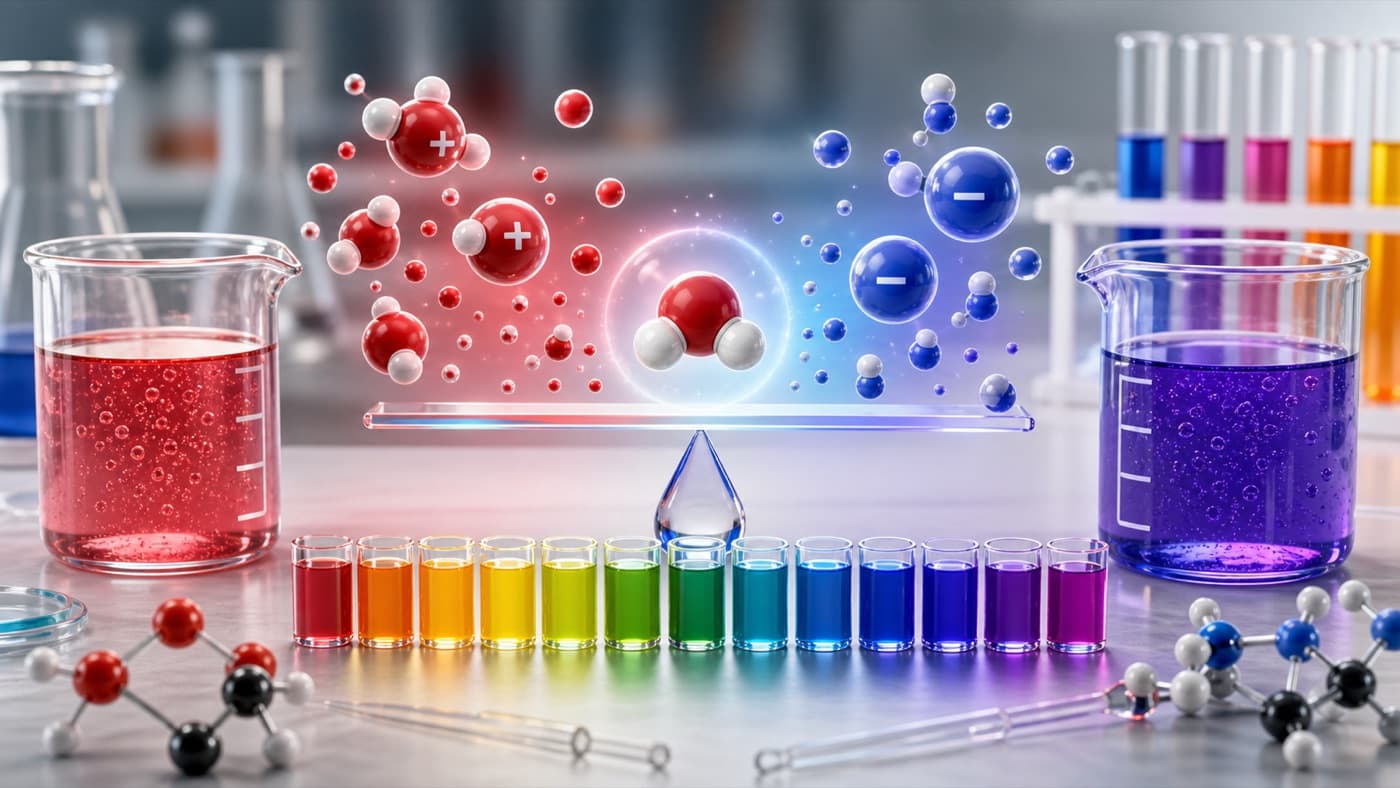
pH is a logarithmic measure of hydrogen ion concentration. Because it is logarithmic, a solution with pH 3 has ten times more hydrogen ion than a solution with pH 4.
At 25 C, neutral water has pH 7. Acidic solutions have pH below 7, and basic solutions have pH above 7.
Strong Acids and Bases
For a strong monoprotic acid, the hydrogen ion concentration is often equal to the acid concentration. For a strong base like NaOH, the hydroxide concentration is often equal to the base concentration.
Always check coefficients. Calcium hydroxide can produce two hydroxide ions per formula unit, so concentration relationships depend on the formula.
pOH Connection
pOH is the hydroxide version of pH. At 25 C, pH + pOH = 14. If you know one, you can find the other.
For very concentrated solutions or non-ideal systems, activity matters, but introductory courses usually use concentration directly.
Useful Site Tools
Use the pH Calculator for pH, pOH, hydrogen ion, and hydroxide ion problems. The Buffer pH Calculator page is listed for Henderson-Hasselbalch buffer work.
Practice With the Free Calculators
Reading the method is step one — running real numbers through it is what makes it stick. These free tools pair well with this guide: