
Limiting Reagent Step by Step
Chemistry Tools | May 5, 2026 | 10 min read
How to identify the limiting reactant, excess reactant, theoretical yield, and leftover amount.
| Step | Question | Output |
| 1 | Is equation balanced? | Coefficients |
| 2 | Convert to moles? | Reactant moles |
| 3 | Divide by coefficient? | Reaction extent |
| 4 | Smallest extent? | Limiting reagent |
Why Limiting Reagents Matter
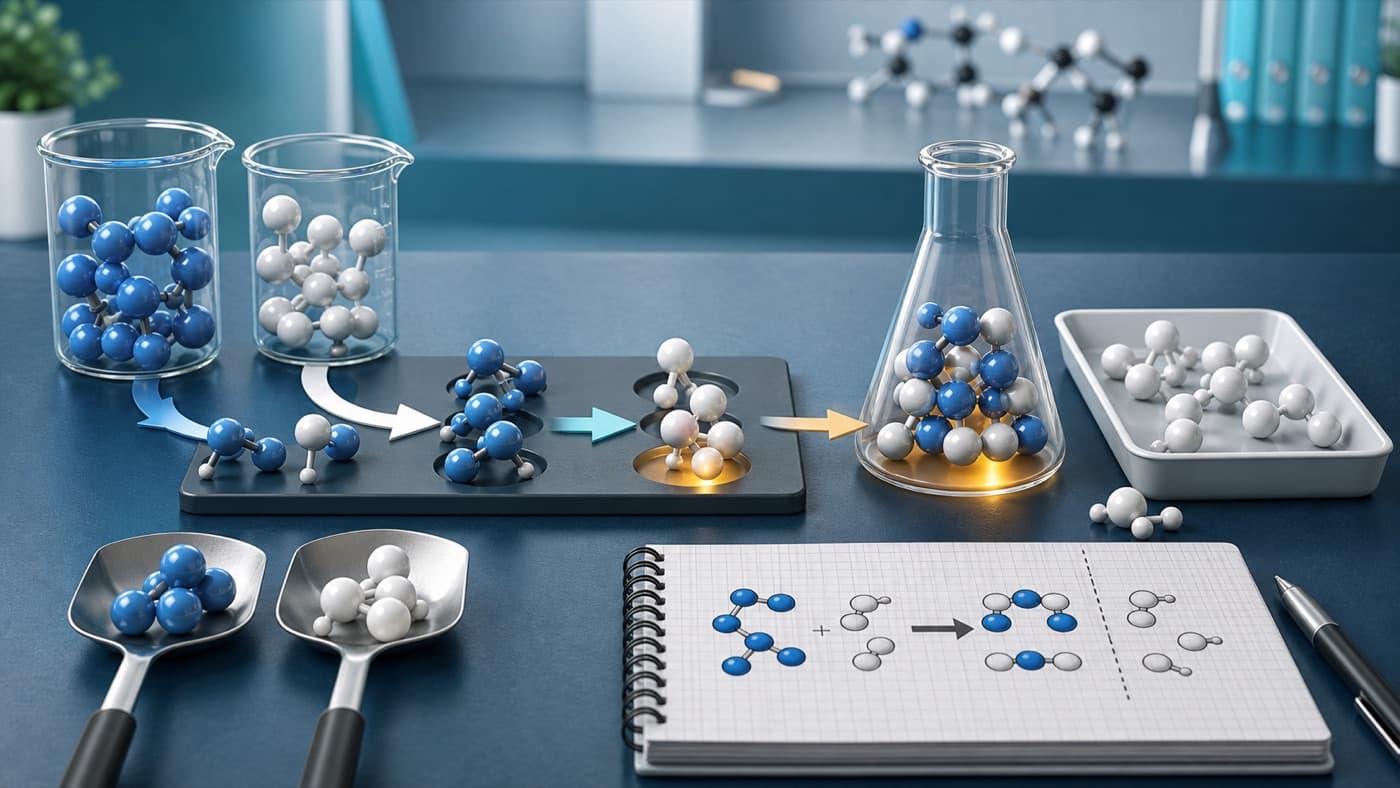
The limiting reagent is the reactant that runs out first. It controls the maximum amount of product that can form. The excess reactant remains after the reaction is complete.
Most mistakes happen when students compare grams directly. Stoichiometry compares moles through a balanced equation, not raw mass.
The Reliable Method
Balance the equation first. Convert each reactant amount to moles. Divide each mole amount by its coefficient in the balanced equation. The smallest value identifies the limiting reagent.
Once you know the limiting reagent, use its mole amount and the balanced coefficients to calculate theoretical product yield.
Leftover Excess
To find leftover excess reactant, calculate how much of the excess reactant is consumed by the limiting reagent. Subtract consumed amount from starting amount.
Keep units organized. Moles are easiest during the stoichiometry step; convert to grams only at the beginning or end as needed.
Useful Site Tools
Use the Limiting Reagent Calculator for limiting and excess reactant work, the Molecular Weight Calculator for molar masses, and the Percent Yield Calculator after you have theoretical yield.
Practice With the Free Calculators
Reading the method is step one — running real numbers through it is what makes it stick. These free tools pair well with this guide: